Driven By Service and Compassion, Angie Carmignani Stands Behind Those Who Stand on the Front Lines
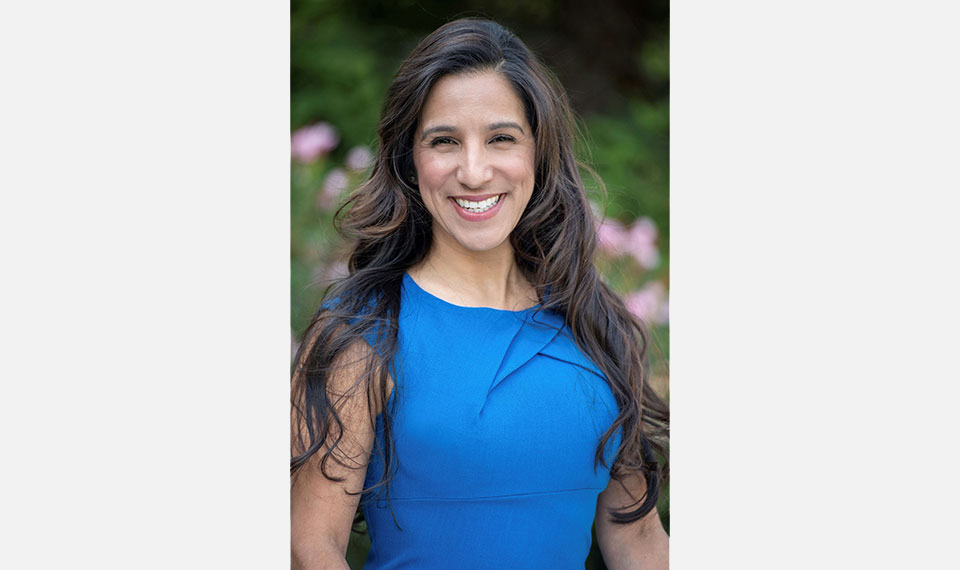
In depth with Angie Carmignani, Executive Director of the California Fire Foundation:
Q: You stepped into your role just before the LA wildfires—what did those first days teach you about leadership in crisis?
AC: Ultimately, those first days taught me that leading during a crisis is about being present, flexible and people centered, treating and seeing others as people that matter. Realizing as a leader that I can’t do it alone, putting my trust into others. Knowing that many things and information is imperfect and trusting myself and my team to do the very best we can in the moment. It’s about balancing urgency with empathy, and action with thoughtful & intentional prioritization. This work continues to shape how we show up each day beyond the disasters.
Q: How has your East Bay upbringing shaped your approach to serving communities across California?
AC: Growing up in the East Bay profoundly shaped my approach to serving communities across California. I was raised on an island with a uniquely diverse population, and I was an active member of what was then the Girls Club, now Girls Inc. of the Island City. That experience exposed me early to a community of girls from all walks of life, different socioeconomic backgrounds, abilities, languages, and cultures. It was an environment that instilled in me a fundamental belief, that we were all equal, that we all mattered, and that each of us brought our own strengths, beliefs and perspectives. Through shared activities, whether dancing, cooking, playing sports, or creating art, we built connections that transcended our differences. We didn’t define one another by labels; we simply saw each other as peers and friends. That foundation continues to influence how I engage with communities today, with openness, respect, and a deep belief in inclusion. Living in a community shaped by one of the largest naval air stations on the West Coast further broadened my perspective. I was surrounded by families representing a wide range of cultures, religions, and global experiences, from Guam, the Philippines, Thailand, Hawaii, Germany, and Japan, among others. That level of diversity felt normal to me, and it wasn’t until later in life that I realized how unique that environment was. It shaped my expectation that communities can and should be interconnected, and culturally diverse.
Service was also a constant in my upbringing. My father was deeply involved in volunteer work, and my mother consistently supported our family and community behind the scenes, stepping in wherever help was needed. Their example instilled in me a strong sense of responsibility to contribute and give back. As a result, pursuing a career centered on service and community impact felt like a natural extension of my upbringing. Today, I carry those early lessons with me—valuing diversity, and leading with a commitment to serve all communities with empathy and respect
Q: What’s one story that captures the real impact behind the $9 million in support?
AC: It’s hard to distill $9 million into a single moment—but if there’s one story that captures its true impact, it’s this-
At the start of last year, our team showed up every day with urgency and purpose. The need across Southern California was immense, and we knew the work ahead wouldn’t slow down. Still, they brought the same level of creativity, energy, and commitment each morning as they did on day one.
We were met with an overwhelming number of grant applications, each one representing a community need, a bold idea, or a nonprofit determined to make a difference. While we couldn’t fund every request, the ones we did support told a powerful story.
We watched organizations take their visions and turn them into real, measurable change. Nonprofits didn’t just sustain their work, they scaled it. They reached more people, rebuilt critical services, and strengthened the communities counting on them.
That’s the real impact behind the $9 million: not just dollars distributed, but possibilities unlocked. It’s the result of a team that showed up relentlessly—and partners who turned funding into lasting change.
Q: How is the Foundation supporting long-term recovery beyond immediate relief?
AC: In response to the Los Angeles and Ventura County fires, the Foundation has developed a comprehensive five-year strategy to guide our long-term recovery efforts. This approach ensures that our support extends well beyond immediate relief, allowing us to remain deeply engaged in the affected communities as rebuilding and recovery evolve over time. By committing to a multi-year framework, we can build and sustain meaningful relationships with local nonprofits, community-based organizations and our Firefighters, to better understand emerging needs, and adapt our investments to support lasting recovery.
Our focus is not only on restoring what was lost, but on strengthening community resilience for the future. This long-term commitment is consistent with our approach to previous disasters, including the 2018 Camp Fire in the town of Paradise. We continue to support recovery efforts there, recognizing that rebuilding is an ongoing process that requires sustained resources and community partnership. Through this strategy, the Foundation remains dedicated to walking alongside communities for the duration of their recovery, ensuring that our support is both responsive and impactful.
Q: What has this past year taught you about resilience and leadership?
AC: This past year has reinforced a simple but powerful lesson: “it’s okay”, when things don’t go as planned. Whether a strategy falls short, a challenge arises, or a mistake is made, what matters most is how you respond. I’ve learned that resilience in leadership is grounded in the ability to acknowledge setbacks without becoming defined by them. When you can accept that something didn’t work, you create the space to move forward with clarity rather than becoming stuck in panic or fear. That shift in mindset allows you to focus on solutions, adapt quickly, and lead others through uncertainty with confidence.
Ultimately, effective leadership is not about avoiding missteps, but about demonstrating accountability, maintaining perspective, and reinforcing a culture where challenges are met with problem-solving and continuous improvement.
Q: How is the California Fire Foundation helping in the Bay area?
AC: In recent years, we have awarded 34 grants across the Bay Area, totaling $653,280. Each grant an investment in strengthening communities, expanding critical services, and supporting those in need.
Beyond grantmaking, our commitment extends through our Benevolent Fund and honoring those who have made the ultimate sacrifice. We supported nine Bay Area families who lost a firefighter in the line of duty, standing beside them in their time of loss. By honoring their loved ones on the memorial wall in Sacramento, we help preserve their legacy by recognizing their service, their sacrifice, and the lasting impact they leave behind.
Q: What is one word of advice you can offer to young women who want to reach your level of success?
AC: Be intentional about building a strong network of colleagues who will support and challenge you along your journey. Seek out individuals who will coach, mentor, and advocate for you, those who will celebrate your successes, ask the tough questions, challenge you and encourage you to grow through challenges. Help to keep you centered when you need it the most. My success is deeply rooted in the community I have chosen to surround myself with. These relationships have provided guidance, accountability, and encouragement at critical moments. The right network will not only lift you up when you need it most but also empower you to keep moving forward with confidence and resilience.
Q: Can you tell our audience one of your most memorable moments of your career?
AC: One of the most memorable moments in my career was being promoted to Executive Director. It was significant for me, not just because of the title, but because it represented a moment of alignment between my own sense of readiness and the trust placed in me by the Co-Founders of the organization I worked for. I had put in the work, taken on increasing responsibility, and developed a deep understanding of both the organization and the communities we served. When the opportunity came, I felt confident in my ability to lead and to step fully into the role. Knowing that our Board Chair, each Co-Founder and the Board of Directors shared that confidence made the moment even more meaningful. What stands out most is the sense of responsibility that came with that promotion. It was a little daunting. It was a transition from contributing to shaping strategy and the Founders vision to ultimately being accountable for guiding the organization’s vision, supporting the team, scaling the business and ensuring we deliver on our mission. That moment affirmed for me the importance of preparation, perseverance, and self-belief. It also reinforced that leadership is not just about reaching the goals but about embracing the opportunity to create meaningful impact for all those we served.
Q: At the start of your career, what do you wish you had known?
AC: At the start of my career, I wish I had known the importance of advocating for myself, particularly when it came to negotiating salary and benefits. Early on, I didn’t fully recognize that compensation is a conversation, not a fixed offer. Understanding the value of my skills, doing research, and approaching the discussion with confidence are critical. Negotiation is not just about salary, it also includes benefits, professional development opportunities, and other resources that support long-term growth.
Learning to advocate for myself in this way has been an important part of my professional development, and it’s a skill I encourage others to build early in their careers. I’m deeply grateful to my colleague that shared how important negotiating in our field was. We set the standards; we owe it to the next generation of philanthropists to set them up to succeed.
Q: Which woman inspires you and why?
AC: The woman who inspires me most is my mother. (I know a little cheesy) She demonstrated, through her everyday actions, what strength, resilience, and dedication truly look like. Balancing the demands of raising a family while working full time is no small feat, and she navigated that life with consistency and determination. In challenging moments, I find myself reflecting on her example. It reminds me that difficult situations can be managed with perseverance and focus. If she was able to navigate those pressures, it reinforces my own ability to do the same. (a little bit of grit & grace) Her example shaped my understanding of work ethics and resilience, and it continues to motivate me to show up with strength and commitment both in my career and in my personal life.
Q: What advice would you give to young women who want to pursue their dream and start a business?
AC: Pursue your vision with intention and confidence, take the risk. Take the time to clearly define your goals, write them down, make a plan and remain committed to them as you move forward. Stay true to your purpose, even when the path becomes challenging. Most importantly, don’t let fear hold you back. There will always be uncertainty, but growth comes from taking calculated risks and moving forward despite it. Often, the biggest barrier is simply taking that first step, so do it anyway.
Q: What advice would you give to young women who want to succeed in the workplace?
AC: My advice is to stay curious and proactive, ask questions, be the first one to raise your hand, seek out opportunities, and don’t be afraid to put yourself forward. Be willing to take initiative and try new things, even if it’s outside your comfort zone. Equally important is ownership, take responsibility for both your successes and your mistakes. Embracing accountability demonstrates integrity, builds trust, and accelerates growth in the workplace. Recognizing that your mistakes are a perfect opportunity to lean in and learn. If or when you fail, “fail forward” take the opportunity to learn from the mistake and move on.
Q: After high school, where did you feel your career path would take you?
AC: The Artisanal Italian Food and Wine industry
Q: Can you tell us how you manage your work life balance?
AC: I manage work-life balance through intentional planning. I calendar everything. I schedule time for exercise, family, friends, vacation and personal priorities, just as I do for work commitments. This approach ensures that each part of my life receives attention and allows me to be fully present in the moment, whether I’m at work or with loved ones. By planning deliberately, I maintain balance and avoid letting one area of my life overshadow another, unless it was planned that way.
Q: What's your advice for women in male-dominated fields?
AC: My advice is to focus on professionalism and mutual respect. I don’t behave differently based on gender. Building strong working relationships, demonstrating competence, and maintaining confidence are far more important than adjusting your behavior to fit expectations in a male dominated environment.
Six Things About Angie Carmignani
1. What’s the most amazing adventure you’ve ever been on?
I walked the Portugues Camino Santiago
2. What’s your favorite app on your phone?
Photos
3. What’s your favorite quote or saying?
"Feel the fear and do it anyway"
4. Favorite City?
Florence, Italy
5. What is your favorite game or sport to watch and play?
I like watching Ice Hockey
6. What were you like in high school?
I was a cheerleader (Ambassador of Friendship and Fun)